Career plans + CV

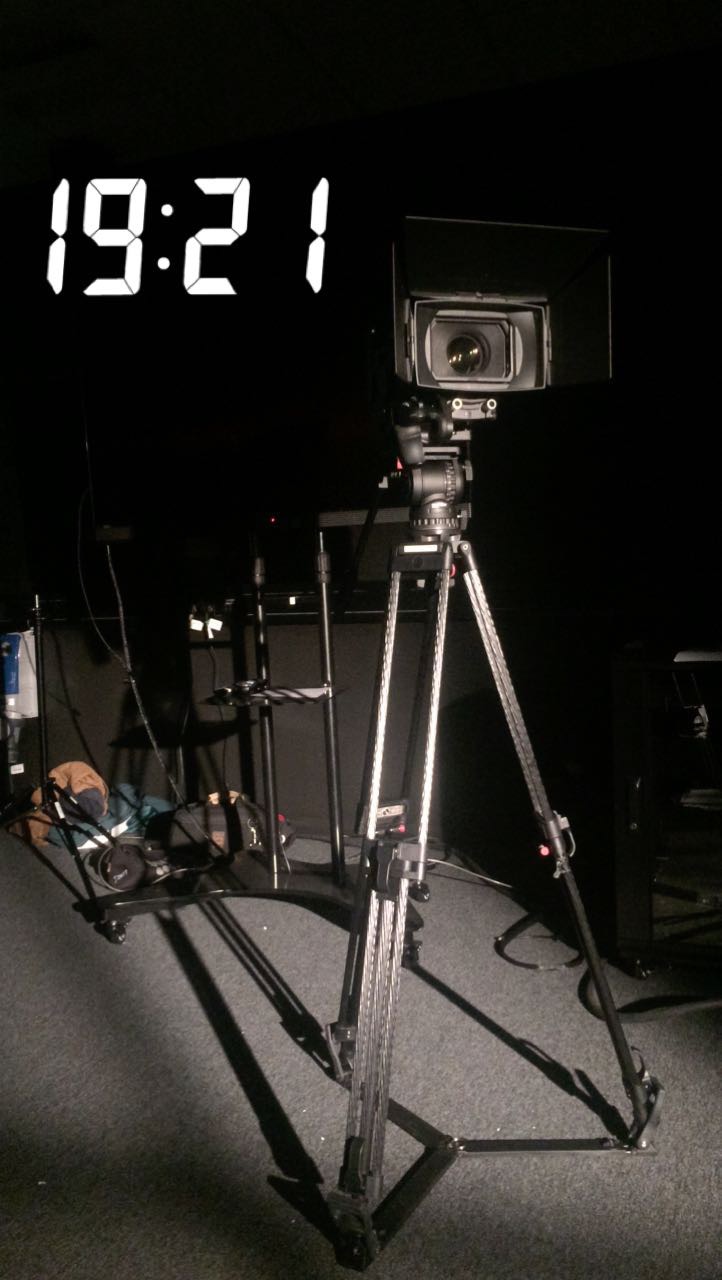
I’m very interested in the camera work that goes into filming, and I would like to chose a career in either film, TV shows or music videos. In different groups through college and university, I have directed, and co-produced numerous film and video projects and independent projects. Planned, organized, and budgeted film shoots utilizing Budgeting and Scheduling. Edited projects and assigned scenes using Adobe Premiere and AVID. Performed sound editing. Wrote scenes, treatments, and portions of scripts. Though I have thoroughly enjoyed all forms of production, my university course has helped me narrow down that I have a strong passion in cinematography and is something I would love to pursue.

I’m hoping after I finish my 3 year course, I graduate with good grades and would’ve had one experience within the industry, whether or not I decide to take a placement year. Those experiences will have gained me a variety of contacts and in an ideal situation it will open doors for me so that I am able to find work straight after leaving university through the contacts I had built up by working hard to show my dedication and passion, then I would be able to work on saving money for a house of my own near a city where I could more easily work on my career. To get started in the industry, I hope to work in the UK for a few short years because I hope my work takes me to live and work in Los Angeles for a huge famous production company.

My ultimate goal would be to make a name for myself and let my work be known and loved globally, I hope to be recognised not only for my films but also for my activism and for trying to make the world a better place through my art. I’d love to inspire other creatives who to be in the industry, to show people that hard work pays off.
I would love to produce both fiction and non fiction film that brings with deep important meanings to help teach and shape our society.
My dream would be to write and direct my own films by this point in my life, working with loads of passionate and talented people to make beautiful films.

Below is my CV:

First year – Reflection

My first year on the BA (hons) film production course is nearly at an end so I have decided to write a post about how I think I have improved over the year and what I want to focus on next.

I took the film knowledge I gained from my two year course at college and applied those skills in my university course. I only had basic editing and camera skills that I really wanted to improve on. Thankfully I’m good at learning how to use technology as it’s something I’m very interested in so I found it quite easy to get used to the camera, the sound kit was a bit of a challenge. I struggled a little with avid as it was a lot more advanced than what I was used to, and for two years been learning and growing on premiere pro, and still now there are a lot of things I’m still not sure about. But the more I have practiced using the editor the more I have got used to it and it gets easier to use every time.

The group projects I have had to work on were all a challenge. The first project went a lot smoother and the outcome was a lot better than I was expecting. We worked well together as a group and made sure everyone did their part. Our second project was a mess as there was a lot of immaturity/dictatorship and people not getting an equal say in the whole video concept which left us with very unprofessional work. The second group project I worked on was a lot more of a struggle as that group didn’t really work out very well. The work wasn’t divided equally and the outcome was quite frustrating, but thankfully managed to have just passed when I wish we produced better work and got a better grade. The third film project went very well and I felt my best work out of the other projects I produced, I had the role of the director which was very challenging, I tried to do my best and made sure everyone in my team was happy and satisfied with the work. I’m hoping for next year we will be allowed to choose our own group members so I can make sure to be with people I can work well with.
I’m also looking forward to the new units next year as they are all something I am very interested in. I have chosen Cinematography, creative music and sound, fiction film making and scriptwriting. As I would like to become a director/creative/ camera-man in the future and I think these units will help me a lot, especially as I am mostly interested in the pre and production side of making films.

Overall I have really enjoyed my first year at uni as my skills have already greatly improved and hope that in the next year I will get to work on more exciting projects that represent my style of work.

Beautiful Boy (2018) – London, Uk Film premiere event (Industry Event)

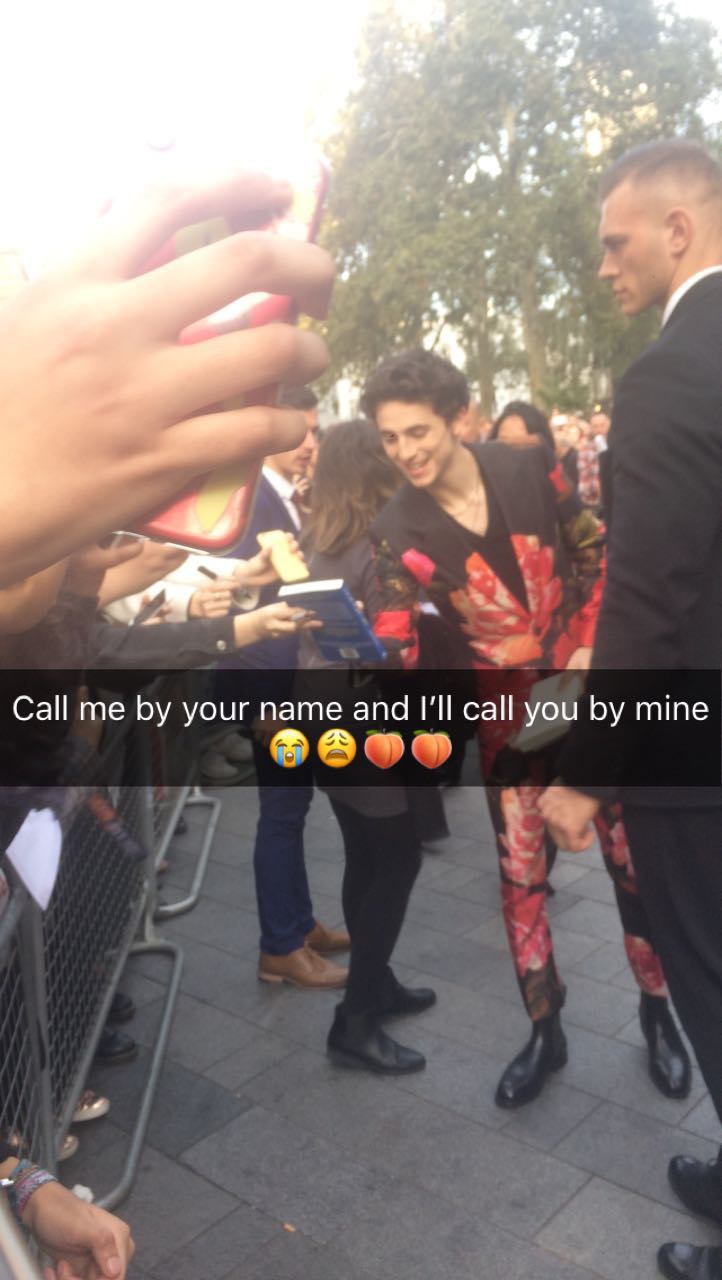
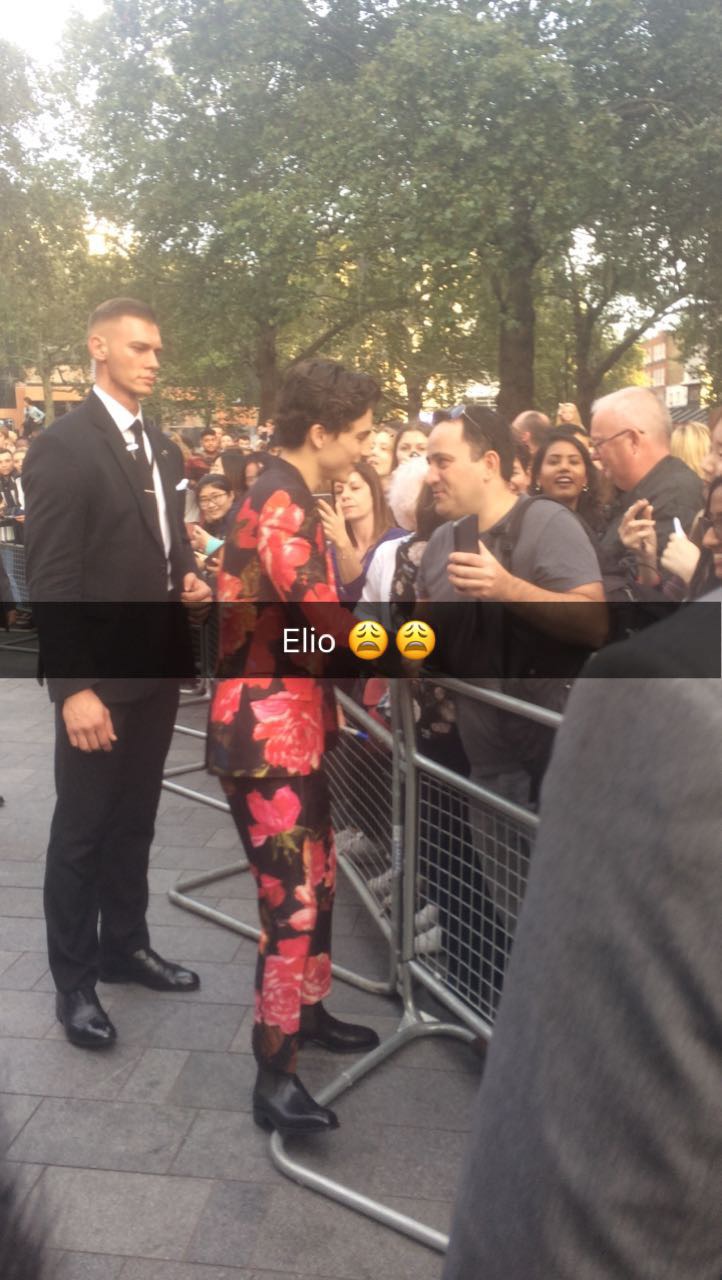
Timothy Chalamet and Steve Carell walk the red carpet at the premiere of their new movie Beautiful Boy during the 2018 BFI London Film Festival on Saturday (October 13) in London, England.

The guys were joined at the event by director Felix Van Groeningen, as well as Nic Sheff and David Sheff, the real-life men who inspired the story for the movie. Based on the best-selling memoirs between real-life father and son David and Nic Sheff, Beautiful boy addresses the harsh realities of growing up, struggling with drug addictions, the impact of family support and – our striving instinct – the need for survival. Tackling a particularly sensitive subject matter, the film portrays the topic through delicate cinematic details, perfectly casted characters and a faithful exploration of enlightenment. In short, it lives up to its title.

This film is all about the relationship between a father and son. Throughout, there isn’t a major emphasis on many other characters, because it zooms in solely on the mechanisms a father attempts to use to save his son. Enter Steve Carell, who fulfils real-life journalist David Sheff’s experience with a faithful performance. At first, there’s silence, then there’s bewilderment, then there’s understanding, then there’s sadness, then there’s a need to protect. In short, the father’s feelings dip up and down, certainly like those of his son.

The setting and cinematography

On to the production side. The film was shot in Los Angeles and San Francisco and, as it runs, it goes from appearing delicate to dangerous in the space of one scene. Groeningen selected Ruben Impens to take control of its cinematography. The result is a tasteful perception that zooms in and out of scenarios at just the right moments (based on, of course, the status of David and Nic’s bond). The film’s regular flashbacks work well too – allowing viewers into David Sheff’s mind while he relays promising moments from Nic’s childhood and questions his actions as a father. All in all: visually rewarding but consistently real.

Timothée Chalamet

A role that is heavily dominated by substance addiction and mental pain isn’t easy to embark on – especially when its cast actor is also expected to honour a real (and pretty well-known) case behind it. Chalamet’s portrayal of Nic and his active addiction is authentic, compelling and completely raw. Your responses take zero influence from the hype (and hardcore fanbase) scored from his previous roles in Call Me By Your Name and Ladybird. The reason for that is simple: Beautiful Boy reels more like a documentary than a film. 

There’s no Hollywood coat over Chalamet – his performance is clearly driven by a wish to respect not only Nic Sheff, but all young adolescents who are currently dealing with similar problems. There is a real purpose to his part – he lost 18 pounds prior to filming, his interpretation of Nic’s detrimental actions are filled with integrity and he doesn’t transgress the reality of suffering with this experience. There’s a dedication to his delivery, and rightly so, because this is an extremely delicate issue for Chalamet to, well, act.

It was a fun experience to be apart of and seeing the celebrities in real life as well as everyone else who worked behind the scenes who where involved in making the movie who used there craft to spread a powerful message and make a beautiful piece of art, as they walked the red carpet, they spoke very briefly on the movie they all created but it was amazing to see the outcome of supportive people who were just as excited as me to watch the film.

Why did I choose Film Production?

I am about halfway through the semester now so I wanted to talk about myself and explain why I chose Film Production as my course and what I plan to do with it in future.

I’m Nayan Sharma, a 19 year old University film production student. I’m a highly motivated, reliable, organised and a confident hardworking individual. Seeking a job in the film industry I’m very passionate about. I am a conscientious person who works hard and pays attention to detail. I’m flexible, quick to pick up new skills and eager to learn from others and develop personal skills in a practical Environment. 

Though my experience may be limited being a student, I have been able to gain wide-ranging knowledge of film and video projects from inception to completion. Effective at organizing and coordinating shoots; experience using production equipment. Conduct script analysis and contribute to script changes. Ability to write and edit scenes, treatments, and scripts; competent in film and sound editing as well as being confident with use of camera, lighting and sound equipment.

I have edited projects and assigned scenes using Adobe Premiere and AVID. Performed sound editing. I’ve written scenes, treatments, and portions of scripts. I’m enthusiastic and creative; demonstrated ability to meet deadlines and objectives. I have excellent organizational and communication talents; solid skills in improving productivity and efficiency while reducing costs.

I have always been a creative person, I see possibilities everywhere and I am constantly taking in information which feeds into my creative expression. I love to express my creativity in artistic traits such as painting, fashion, photography but Film is the medium that inspired me most, film to me is a form of expressive art and culture and I have grasped many opportunities to gain more practical experience on all forms of production.

As I had always loved editing I saw myself as working as an editor before I started uni. I was looking forward to trying out a better editor and editing things to music and adding effects. But once I actually started I realised that Avid was a lot more complicated than I had expected. After one of our film projects I then realised that I actually very much enjoy directing and cinematography, especially if the film is about an idea I had envisioned. So now I could see myself more as a director and cinematographer than an editor. So hopefully now I can actually be able to work on set and direct my own movies. I still plan on getting better at editing though as I want to keep my future options open.

As I mentioned before I love working with equipment and I found it very exciting to start working with the Canon 7D as it was a lot bigger and better than what I had previously used but I’m more excited for my second and third year as our equipment will be upgraded and I can become more hands on to produce more film content of a higher quality.

Alumni panel (Industry event)

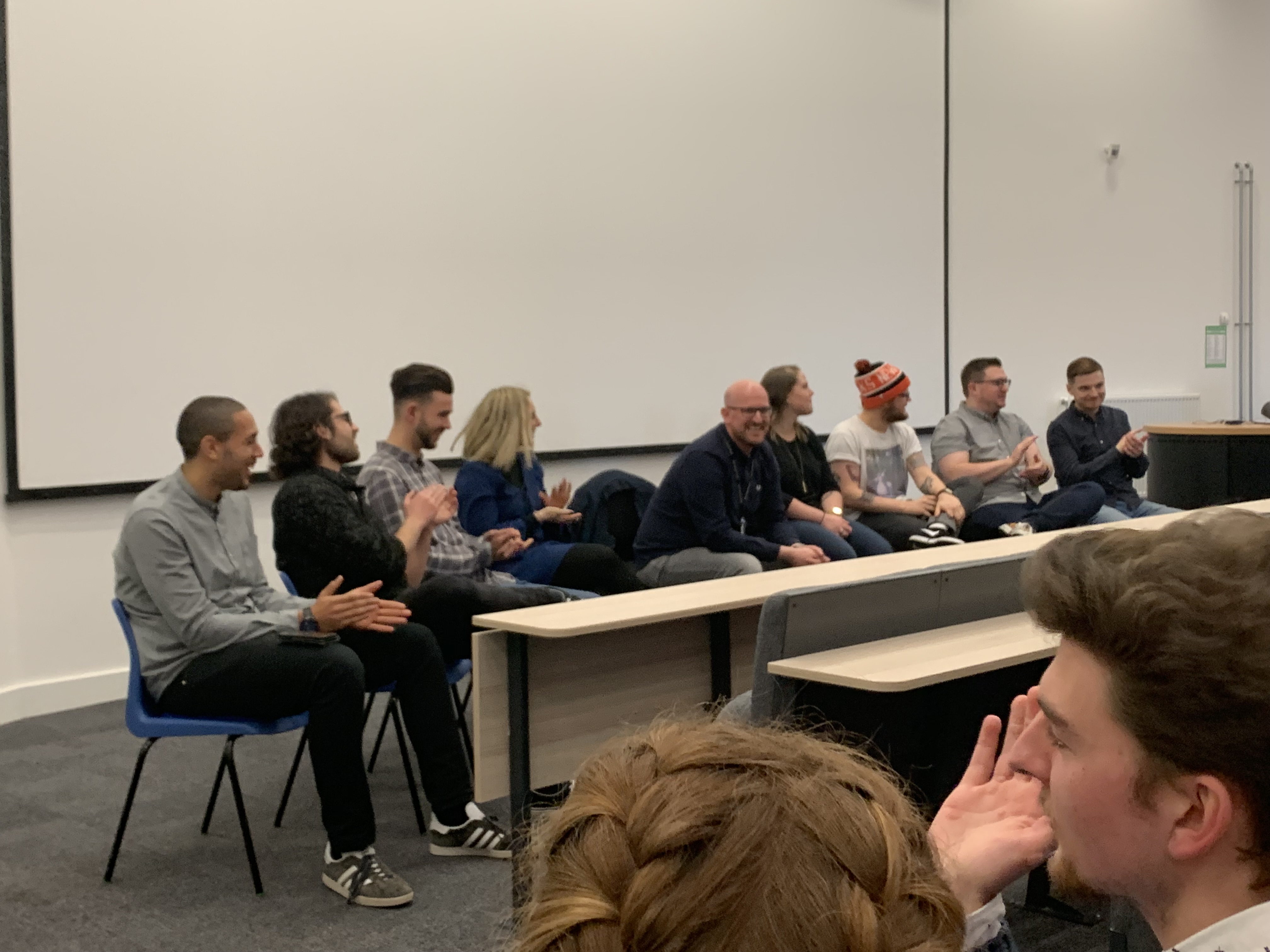
The university held an alumni panel event in Eldon building to give us tips and explain about what it’s like after graduation and what to expect within the film industry. There were eight graduates on the panel all working in very different fields, from post production technical manager to editor for a gaming channel on YouTube, and they discussed three principle things to enable us to land positions in future for this competitive industry.

They spoke about the difference between working freelance or being employed and outweighing the pros and cons. Being employed means that you only work for one company with one specific role and your payment is guaranteed so the job has more security. Being freelance means that you can work as different roles for different people on whatever you choose on your own account, but the payments and jobs aren’t always guaranteed. The panel agreed that it would be easier to become employed after graduation as it makes things easier, and then once we have acquired more skills and contacts, should decide wether to work freelance or not.

The panel also discussed how we could get opportunities. The most important thing they mentioned was to take any opportunities the uni offers us to gain a wider range of contacts after graduation, and also stay in contact with them for as long as possible and socialise so you can network with clients and employers so they can keep your name in mind for future projects. Another point they mentioned was to do things beyond the course, like work experiences or just going out to film by ourselves to work on our skills. We were also told to have social media accounts to promote our work.

We were also given tips on how to do our CVs properly. The easiest thing to do is have a couple of different ones, each for different roles depending on what sort of job we’re applying for. Also we are not supposed to do anything to over the top, and keep the CV short and informative.

Additional tips they gave us were not to give ourselves get used by big companies in hopes of getting good connections. If we realise we are paying more to do our work than we are receiving we should leave as fast as we can and find a different place to work. In the event that we understand we are paying more to do our work than we are accepting we should leave as quick as we can and locate a better place to work. smaller companies are a more superior spot to go to in the event if we haven’t gotten much experience and are seeking after reasonable pay.

Overall I found the event very interesting. I will definitely keep the tips in mind when I come to look for jobs after graduation.

Blog at WordPress.com.

Up ↑

Design a site like this with WordPress.com
Get started